
What Is Tamboolam? The Meaning, History & Significance Of This Beautiful Wedding Tradition
Indian weddings are filled with traditions that carry deep meaning. Tamboolam is one such beautiful custom. It may look simple, but it represents respect, gratitude, prosperity, and auspicious beginnings.
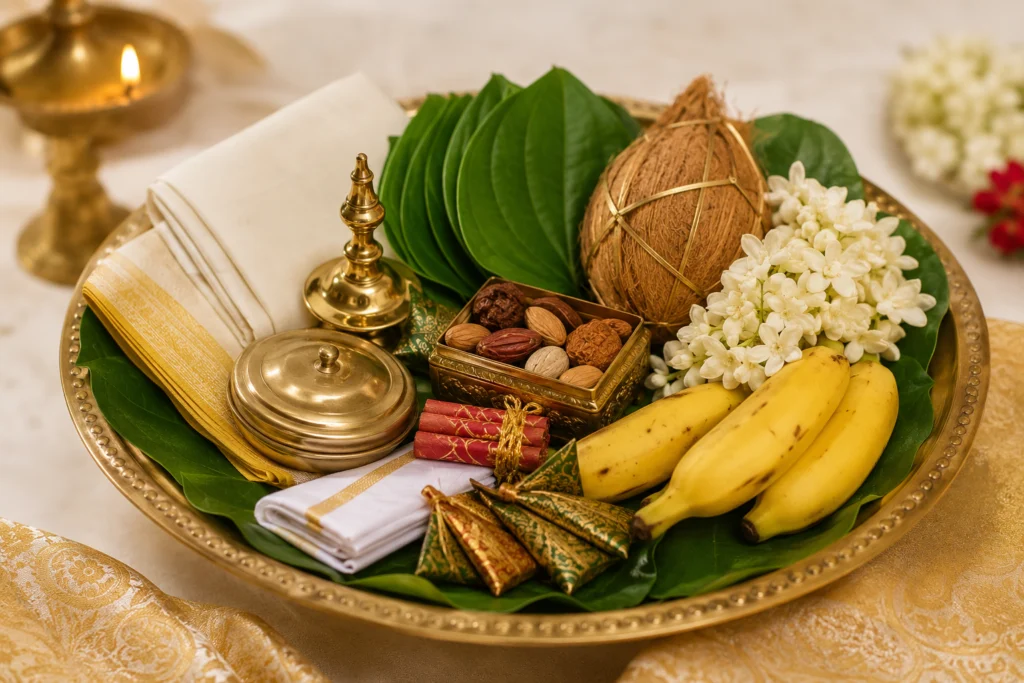
You may have seen beautifully arranged betel leaves, areca nuts, fruits, flowers, sweets, and small gifts being given to wedding guests. This traditional offering is commonly known as Tamboolam, Thamboolam, or Thambulam.
The tradition remains especially popular across South India. It continues to appear in weddings, religious ceremonies, festivals, and other auspicious occasions. The Kerala government’s Directorate of Arecanut and Spices Development also notes that betel leaves, known as Tambula in Sanskrit, have long held cultural significance in rituals, hospitality, and social customs.
So, what exactly is Tamboolam? Where did it come from? And why does it hold such an important place in weddings?
Let’s explore the beautiful story behind this tradition.
What Is Tamboolam?
Tamboolam is a traditional offering made with betel leaves, areca nuts, and other auspicious items.
It is commonly presented during weddings, engagements, poojas, festivals, and family celebrations. Depending on the community and occasion, the offering may also include turmeric, kumkum, fruits, flowers, coconut, sweets, dry fruits, or a small return gift.
In wedding celebrations, Tamboolam can serve several purposes.
It can be exchanged between families. It can be offered to elders while seeking blessings. It can also be presented to guests as a gesture of appreciation.
At its heart, Tamboolam represents hospitality, respect, goodwill, and blessings.
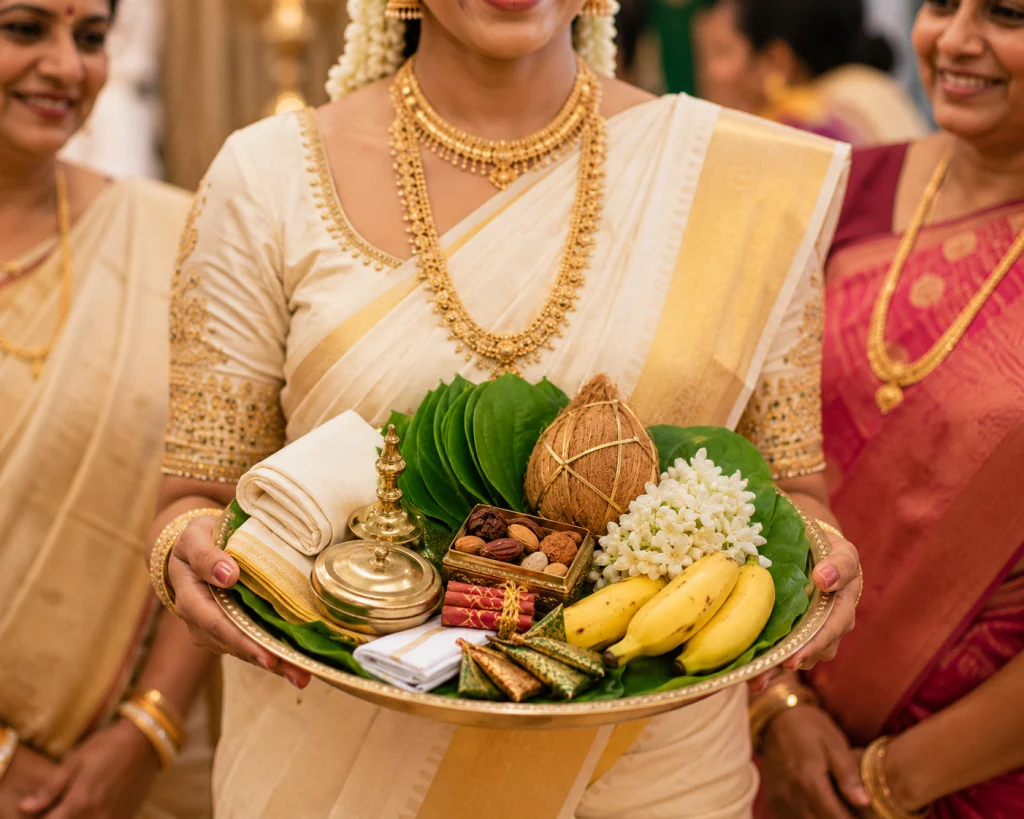
The History Behind Tamboolam
The tradition of using betel leaves and areca nuts is much older than modern wedding customs.
Betel has been part of South Asian social and cultural practices for centuries. Historical research also documents the exchange of tambula as a token connected with honour, marriage, vows, and social relationships.
In Kerala, betel was traditionally an important part of marriage ceremonies. Historical evidence records wedding guests being offered betel leaves on brass platters, highlighting how strongly the practice was connected with hospitality.
Over generations, this simple offering became closely associated with auspicious occasions.
Today, the traditional betel-leaf offering has evolved into beautifully designed Tamboolam bags, trays, baskets, and return gifts.
Why Are Betel Leaves Important?
The betel leaf is the heart of traditional Tamboolam.
Across Indian traditions, betel leaves are associated with auspiciousness, respect, hospitality, and prosperity. They are used during religious rituals and important family occasions.
The Sanskrit term Tambula is traditionally associated with betel leaf, and its cultural use extends beyond weddings into rituals and social customs.
The fresh green colour of the leaf also adds a natural and vibrant touch to traditional wedding arrangements.
This makes betel leaves both symbolic and visually beautiful.
What Does Tamboolam Symbolise?
Tamboolam carries several layers of meaning.
Respect
Offering Tamboolam to elders represents respect and gratitude.
Families often present betel leaves and other auspicious items while seeking the blessings of elders.
Prosperity
Traditional wedding offerings are often connected with wishes for abundance and prosperity.
Tamboolam therefore becomes a symbolic blessing for the couple’s new journey.
Auspicious Beginnings
Marriage marks the beginning of a new chapter.
Tamboolam represents the hope that this new beginning will bring happiness, harmony, and prosperity.
Hospitality
Giving Tamboolam to guests is also a beautiful way of saying:
“Thank you for being part of our celebration.”
The practice connects the wedding couple, their families, elders, and guests through a simple act of giving.
Tamboolam In South Indian Weddings
Tamboolam appears differently across South India.
The core idea remains similar, but the ingredients, presentation, and ritual can vary between communities.
Tamil Weddings
In many Tamil wedding traditions, betel leaves and areca nuts are exchanged during important rituals. They may be presented alongside fruits, coconut, turmeric, kumkum, and other auspicious items.
Tamboolam may also be given to guests as they leave the celebration.
Telugu Weddings
Tamboolam plays an important role in several Telugu wedding customs.
Betel leaves and areca nuts can be exchanged by families and elders during ceremonial occasions. Elaborate Tamboolam arrangements may also include sweets, fruits, dry fruits, and gifts.
Kannada Weddings
Tamboolam is traditionally connected with blessings, respect, and hospitality.
It may be exchanged during wedding-related rituals and presented to family members and guests.
Kerala Weddings
In Kerala, betel leaves and areca nuts have traditionally been associated with auspicious occasions and hospitality. Historical accounts also document their presence in Kerala marriage ceremonies.
In some Kerala Hindu engagement traditions, families exchange betel leaves and areca nuts as part of formalising the relationship between the two families.
Customs naturally differ between communities, so there is no single Tamboolam ritual followed by every Kerala wedding.
What Goes Inside A Traditional Tamboolam?
A traditional Tamboolam arrangement can contain several auspicious items.
Common choices include:
- Betel leaves
- Areca nuts
- Turmeric
- Kumkum
- Coconut
- Fruits
- Flowers
- Sweets
- Dry fruits
- Coins or small monetary offerings
- Small traditional gifts
Modern Tamboolam bags can also include useful keepsakes.
For example, couples may choose:
- Brass diyas
- Handmade soaps
- Spice packets
- Small plants
- Handcrafted accessories
- Traditional snacks
- Reusable cloth bags
- Wooden keepsakes
The exact contents depend on the family, community, budget, and type of wedding.
Tamboolam As A Wedding Return Gift
One of the most familiar modern forms of Tamboolam is the wedding return gift.
After the celebrations, guests receive a beautifully packed Tamboolam as a token of appreciation.
Traditional elements can be combined with modern gifts. A couple might place betel leaves and areca nuts inside a decorated cloth bag along with sweets, spices, dry fruits, or a small keepsake.
This gives the tradition a contemporary personality without losing its cultural identity.
Traditional Tamboolam Meets Modern Weddings
Modern couples are finding creative ways to present Tamboolam.
Instead of using ordinary plastic packaging, many choose eco-friendly and reusable materials.
Cloth Bags
Handcrafted cotton or jute bags create a simple traditional appearance.
Brass Containers
Small brass containers add a classic South Indian touch.
Bamboo Baskets
Bamboo baskets work beautifully for rustic and eco-conscious weddings.
Palm-Leaf Packaging
Traditional palm-leaf baskets can create an earthy Kerala-inspired aesthetic.
Personalised Gifts
Couples can add their names, wedding date, or a small thank-you note.
These ideas make Tamboolam feel personal while preserving its traditional character.
The Importance Of Tamboolam In Kerala Culture
Kerala’s wedding traditions place strong emphasis on hospitality and community.
Traditional wedding celebrations often bring together large groups of relatives, friends, and neighbours. Offering food, gifts, and auspicious items becomes part of welcoming and honouring these guests.
Betel-leaf customs have historically been connected with this culture of hospitality in Kerala.
Tamboolam therefore represents more than an attractive wedding favour.
It reflects a simple cultural idea:
Give with respect. Receive with gratitude. Celebrate together.
Is Tamboolam Only Used For Weddings?
No.
Tamboolam is used for many auspicious occasions.
These can include:
- Engagement ceremonies
- Poojas
- Housewarming ceremonies
- Festivals
- Baby-related celebrations
- Religious functions
- Family gatherings
- Traditional feasts
Its meaning can change slightly depending on the occasion, but respect, goodwill, hospitality, and auspiciousness remain central themes. (Kerala Government)
Tamboolam In The Modern Wedding Era
Wedding traditions naturally evolve.
Today’s couples may not follow every traditional practice exactly as previous generations did. Yet Tamboolam continues to survive because its emotional meaning remains relevant.
The presentation may change.
The packaging may change.
The gifts may change.
But the underlying message remains the same.
“Thank you for celebrating our special day with us.”
That is what makes Tamboolam such a timeless wedding tradition.
A Small Tradition With A Big Meaning
Tamboolam may appear to be a simple collection of betel leaves, areca nuts, fruits, sweets, and gifts.
But its meaning goes much deeper.
It carries the values of respect, gratitude, prosperity, hospitality, and togetherness.
From traditional brass plates to beautifully designed modern Tamboolam bags, this custom has adapted to changing wedding styles while preserving its cultural roots.
And perhaps that is the beauty of Indian wedding traditions.
They evolve with every generation.
Yet their meaning continues to connect families.
Tamboolam is not simply something you give your wedding guests. It is a small reminder that every celebration becomes more meaningful when shared with the people you love.
How To Present Tamboolam At A Wedding
The presentation of Tamboolam can make the tradition even more special. A thoughtfully arranged Tamboolam tray or gift bag adds beauty while keeping the cultural meaning intact.
1. Traditional Brass Tray
A brass tray creates a classic South Indian wedding look. Arrange betel leaves, areca nuts, turmeric, kumkum, fruits, and sweets neatly on the tray.
Add fresh flowers around the edges. This creates an elegant and traditional presentation.
2. Beautiful Tamboolam Bags
Cloth bags offer a practical modern option. Choose cotton, silk, jute, or handloom fabrics.
You can personalise the bags with the couple’s names or wedding date. Guests can reuse them after the wedding.
3. Eco-Friendly Baskets
Bamboo and palm-leaf baskets work beautifully for traditional weddings. They also create a natural and sustainable presentation.
Add traditional treats, spices, or small plants alongside the usual Tamboolam items.
4. Kerala-Inspired Tamboolam
For a Kerala wedding, create a distinctly local look. Use kasavu fabric, banana leaves, brass elements, and traditional flowers.
You can also include Kerala favourites such as homemade snacks or local spices. This makes the Tamboolam feel connected to the region’s culture.
5. Personalised Tamboolam Gifts
Personalisation can make a simple gift memorable. Add a small thank-you card with the couple’s names.
You could also choose a useful keepsake for every guest. This combines traditional symbolism with modern wedding preferences.
How To Choose Tamboolam Items
You don’t need to fill the Tamboolam with expensive gifts. The meaning of the tradition matters more than the price.
Consider these points when selecting items:
- Keep the traditional elements intact.
- Choose useful gifts.
- Match the wedding theme.
- Prefer reusable packaging.
- Consider your wedding budget.
- Select items that suit your guests.
- Keep the arrangement neat and attractive.
A simple Tamboolam can often feel more elegant than an overloaded gift hamper.
Final Thoughts
Tamboolam beautifully connects tradition, hospitality, and gratitude.
Its ingredients may look simple. Yet every element represents a meaningful part of Indian wedding culture.
Whether you choose a traditional brass tray or a modern eco-friendly gift bag, the purpose remains unchanged—to honour your guests and share your happiness with them.
That is why Tamboolam continues to hold a special place in weddings even today.