
Creative Food Presentation Ideas That Are Totally Doable
Food presentation can change how people experience a meal. You do not need expensive plates or professional equipment. Simple arrangements can make ordinary dishes look attractive.
Whether you are hosting a wedding, birthday, dinner party, family gathering, or special event, creative food presentation adds a memorable touch. The best part is that most ideas are easy to recreate at home.
Here are some creative food presentation ideas that are totally doable.
1. Use Wooden Boards for a Rustic Look
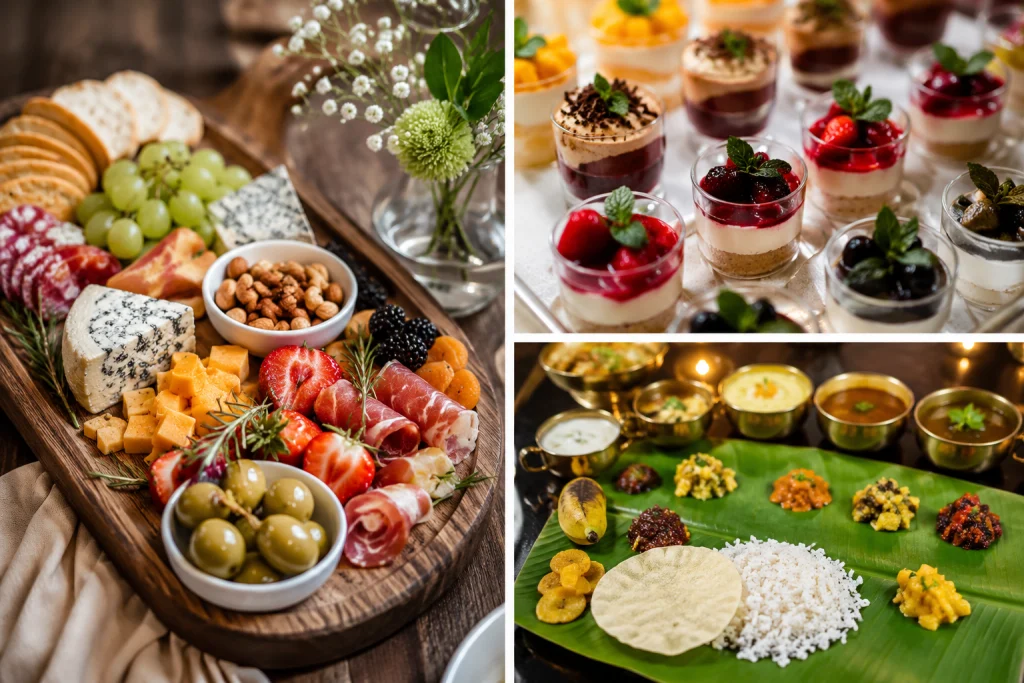
Wooden serving boards instantly create a warm and rustic appearance. They work especially well for snacks, appetizers, desserts, and cheese platters.
Arrange different foods across the board. Leave small gaps between items to create a balanced look.
You can add fresh herbs, fruits, nuts, or edible flowers around the food. This makes the presentation feel natural without requiring complicated decoration.
2. Try Mini Food Portions
Mini portions can make your food table look elegant. Instead of serving everything on one large plate, divide dishes into individual portions.
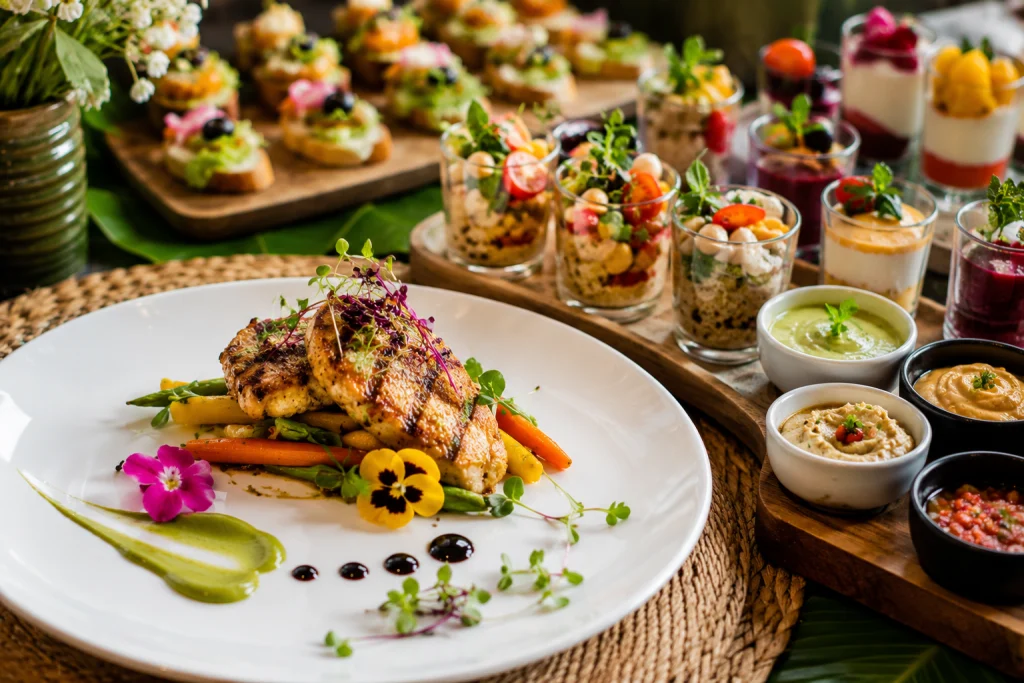
Use small bowls, glasses, cups, or spoons. Mini desserts, salads, appetizers, and starters work particularly well with this style.
Individual portions also make serving easier. Guests can simply pick up a portion and enjoy it.
3. Add Fresh Garnishes
A simple garnish can completely change the appearance of a dish.
Use ingredients that naturally complement the food. Fresh coriander, mint, parsley, spring onions, lemon slices, berries, and edible flowers can add colour and freshness.
However, avoid adding too many garnishes. A few carefully placed elements usually look better than a crowded plate.
4. Play With Food Colours
Colour is one of the easiest ways to improve food presentation.
Combine foods with different natural colours. For example, pair green vegetables with bright red tomatoes, yellow corn, purple cabbage, or orange carrots.
Try to create contrast on the plate. A colourful arrangement looks more appetising and photographs beautifully.
5. Use Small Bowls for Dips and Sauces
Instead of pouring sauces directly onto the plate, serve them in small bowls or ramekins.
This keeps the plate clean and gives guests more control over how much sauce they want.
For a party, place different sauces together. You can use small labels to identify each option.
6. Create Height on the Plate
Flat food arrangements can sometimes look ordinary. Adding different heights can make the presentation more interesting.
Place one food element slightly higher than another. For example, stack pancakes, arrange sandwiches in layers, or place vegetables vertically.
You can also use small serving stands for desserts and snacks.
The key is to create height without making the food difficult to eat.
7. Make Dessert Cups
Dessert cups are simple, attractive, and easy to serve.
Layer ingredients such as cake, cream, fruits, mousse, pudding, or biscuits inside transparent glasses.
The layers become part of the presentation. You can finish them with berries, chocolate shavings, mint leaves, or crushed nuts.
This idea works particularly well for birthdays, weddings, and dinner parties.
8. Serve Food on Slate Plates
Slate plates can give your food a modern restaurant-style appearance.
They work well for starters, grilled foods, desserts, and cheese. The dark background creates strong contrast with colourful ingredients.
Keep the arrangement simple. Place the main food slightly off-centre and add a small amount of garnish.
9. Use Banana Leaves for Traditional Presentation
Banana leaves are a beautiful option for traditional Indian food presentation.
They can create a natural and authentic dining experience. They are especially suitable for South Indian meals, traditional celebrations, and cultural events.
Arrange the dishes neatly and maintain enough space between each item. The natural green colour of the leaf itself adds visual appeal.
10. Try Creative Plating With Sauces
Sauces can become part of the design.
Instead of simply pouring sauce over the food, create a small swirl, line, or dots on the plate.
Use a spoon or squeeze bottle to control the shape. Keep the design simple so the food remains the main attraction.
11. Use Edible Flowers
Edible flowers can give desserts, salads, and special dishes an elegant appearance.
Choose flowers that are specifically safe for eating. Never use random flowers from gardens or decorative arrangements.
Use only a few flowers as accents. Too many can make the plate look overly decorated.
12. Turn Fruits Into Decorations
Fresh fruits can double as both ingredients and decorations.
Strawberries, oranges, grapes, berries, watermelon, kiwi, and pineapple offer bright natural colours.
Create simple fruit arrangements around cakes, desserts, breakfast platters, or beverages.
You can also cut fruits into different shapes using small cookie cutters.
13. Arrange Food in Layers
Layering creates structure and makes a serving platter look fuller.
For sandwiches, cakes, pancakes, or snacks, arrange pieces in neat layers.
Use different textures and colours between layers. This creates visual interest without requiring special tools.
14. Use Matching Serving Ware
You do not always need unusual plates to create beautiful food presentation.
Sometimes matching bowls, plates, glasses, and spoons can make the entire table look more organised.
Choose serving ware that complements the type of event. Neutral plates work well for modern settings, while traditional materials can suit cultural celebrations.
15. Create a Themed Food Table
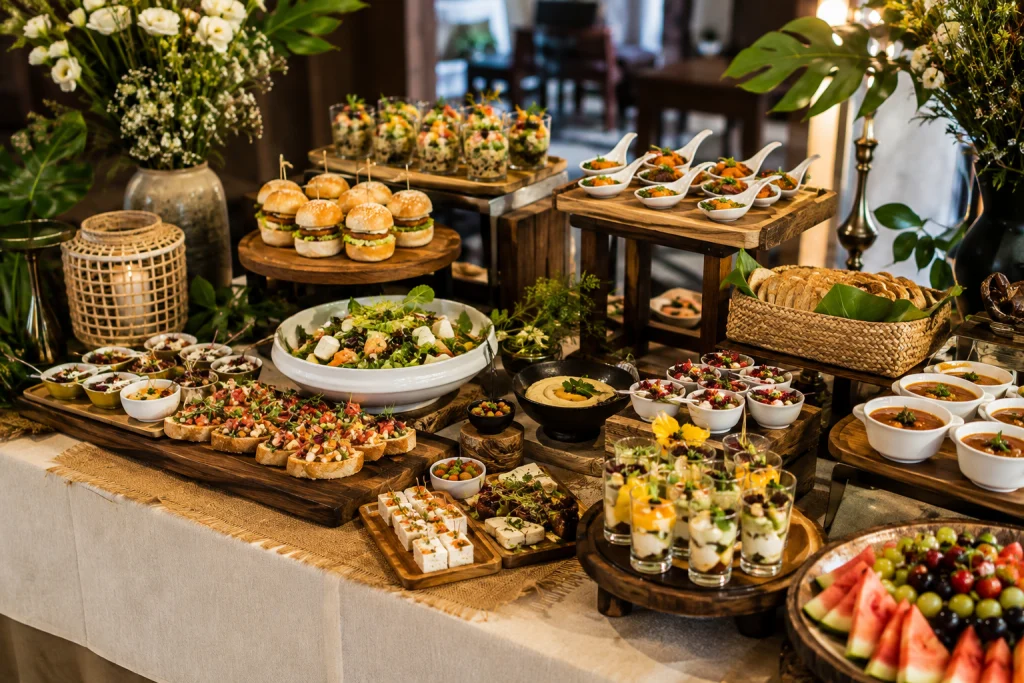
A themed food table can make an event more memorable.
Choose a simple theme based on the occasion. You could create a tropical fruit table, traditional Kerala food setup, dessert corner, breakfast station, or colourful snack table.
Keep the food, serving ware, labels, and decorations connected to the same theme.
16. Use Food Labels
Food labels are both practical and decorative.
Create small cards mentioning the name of each dish. You can also mention important details such as vegetarian, spicy, vegan, or allergen information where relevant.
Use consistent fonts and designs for all labels. This creates a clean and professional appearance.
17. Add Natural Elements
Natural elements can make a food setup feel fresh and inviting.
Use wooden trays, banana leaves, bamboo baskets, fresh herbs, fruits, or simple flowers.
These elements work especially well for outdoor parties, traditional celebrations, brunches, and rustic-themed events.
18. Keep the Plate Balanced
Good presentation is not about filling every empty space.
Leave some space around the food. This helps the main dish stand out.
A simple rule is to focus on one main item and use smaller elements to support it.
Avoid overcrowding the plate with too many colours, sauces, or garnishes.
19. Match Presentation With the Occasion
Your food presentation should match the event.
For a wedding, elegant plating and coordinated serving ware can create a sophisticated look.
For birthdays, brighter colours and playful arrangements can work better.
For traditional celebrations, natural materials and regional serving styles can create a more authentic atmosphere.
20. Focus on Cleanliness
The easiest way to make food look professional is to keep the presentation clean.
Wipe the edges of plates before serving. Remove accidental sauce drops and keep serving areas organised.
Clean plates, fresh ingredients, and neat arrangements can make even simple food look premium.
Final Thoughts
Creative food presentation does not have to be complicated or expensive. Small changes can make a big difference.
Use colour, height, texture, garnishes, and suitable serving ware to improve your presentation. Most importantly, make sure the food remains easy to eat.
Whether you are planning a family dinner or a large celebration, these creative food presentation ideas can help you create a beautiful and inviting food setup without professional equipment.