
A traditional Kerala wedding is more than a celebration. It is a beautiful combination of culture, spirituality, and family values. Every ritual, decoration, and ceremonial item has a special meaning. Among these traditions, Ashtamangalyam holds an important place.
The word Ashtamangalyam comes from two Sanskrit words: “Ashta” meaning eight and “Mangalyam” meaning auspicious or sacred. Together, they refer to eight sacred items that symbolize prosperity, purity, happiness, and blessings for the couple.
In Kerala, especially in Hindu weddings, Ashtamangalyam is arranged beautifully near the wedding stage or ceremonial area. These sacred items are not placed only for decoration. They represent prayers for a happy married life, good health, wealth, wisdom, and spiritual growth.
Today, wedding decorators carefully include Ashtamangalyam in traditional wedding themes. The arrangement enhances the beauty of the venue while preserving Kerala’s rich cultural heritage. Whether it is a temple wedding, an intimate ceremony, or a grand destination wedding, Ashtamangalyam adds elegance and deep cultural value to the celebration.
In this article, you will learn what Ashtamangalyam is, the meaning of each sacred item, why it is used in weddings, and how it plays an important role in creating authentic Kerala wedding decorations.
What Is Ashtamangalyam?
Understanding the Meaning of Ashtamangalyam
Ashtamangalyam is a sacred arrangement of eight auspicious items used in traditional Kerala Hindu weddings and other religious ceremonies. These items are believed to bring blessings, prosperity, peace, and happiness to the newly married couple.
The tradition has been followed in Kerala for centuries. It reflects the state’s rich cultural and spiritual heritage. During the wedding ceremony, the Ashtamangalyam set is placed near the mandapam or wedding stage. Family members and priests use these items during important rituals to seek divine blessings.
Although the arrangement may vary slightly between families and regions, the purpose remains the same. Every item represents a positive quality that the couple should carry into their married life. Together, these sacred objects symbolize a life filled with love, harmony, good fortune, wisdom, and abundance.
The Eight Sacred Items of Ashtamangalyam
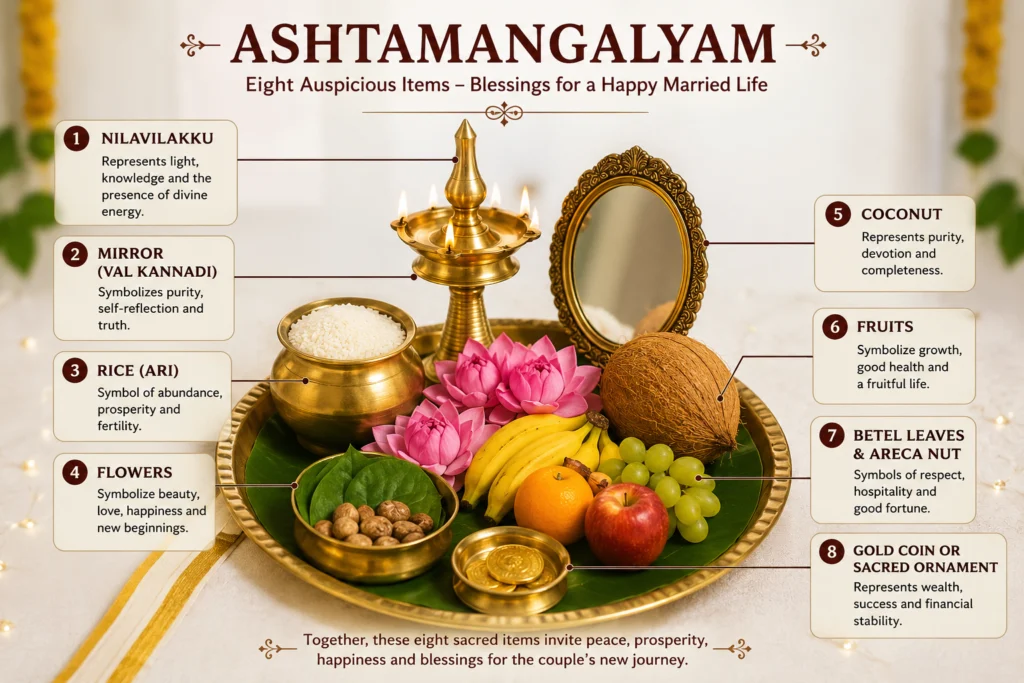
The traditional Ashtamangalyam arrangement usually includes the following items:
1. Nilavilakku (Traditional Lamp)
The Nilavilakku represents light, knowledge, and the presence of divine energy. Lighting the lamp before the ceremony is believed to remove negativity and welcome prosperity into the couple’s new journey.
2. Mirror (Val Kannadi)
A traditional metal mirror symbolizes purity, self-reflection, and truth. It reminds the bride and groom to begin their married life with honesty, respect, and mutual understanding.
3. Rice (Ari)
Rice is a symbol of abundance, fertility, and prosperity. It represents the wish that the couple will always have food, wealth, and a comfortable life.
4. Flowers
Fresh flowers symbolize beauty, love, happiness, and new beginnings. They also create a peaceful and positive atmosphere during the wedding ceremony.
5. Coconut
The coconut represents purity, devotion, and completeness. It is considered one of the most sacred offerings in Hindu rituals and is believed to invite divine blessings.
6. Fruits
Fruits symbolize growth, good health, and a fruitful married life. They also represent gratitude for nature’s abundance.
7. Betel Leaves and Areca Nut
These are traditional symbols of respect, hospitality, and good fortune. They are commonly used in Kerala’s religious and cultural ceremonies.
8. Gold Coin or Sacred Ornament
A gold coin or ornament represents wealth, success, and financial stability. It symbolizes the hope that the couple will enjoy a prosperous future together.
Each of these eight items carries a deeper spiritual meaning. When arranged together, they create a sacred setting that reflects Kerala’s timeless wedding traditions and cultural values.
Why Ashtamangalyam Is Used in Kerala Weddings
A Sacred Tradition That Welcomes Blessings
Ashtamangalyam is not just a collection of ceremonial items. It is a sacred tradition that reflects the spiritual and cultural values of Kerala. Each item is carefully chosen to invite divine blessings and create a positive beginning for the couple’s married life.
In Hindu belief, every new journey should begin with auspicious symbols. Marriage is one of the most important milestones in life. Therefore, Ashtamangalyam is placed near the wedding mandapam to create a sacred atmosphere and seek the blessings of God, elders, and nature.
Symbol of Prosperity and Happiness
Every item in the Ashtamangalyam arrangement represents a wish for the newlyweds. Together, they symbolize:
- A life filled with happiness and peace.
- Good health and long life.
- Prosperity and financial stability.
- Love, unity, and mutual respect.
- Fertility and family growth.
- Wisdom and spiritual well-being.
These blessings remind the couple to build their new life on values such as trust, gratitude, and compassion.
Preserving Kerala’s Rich Cultural Heritage
Ashtamangalyam has been part of Kerala weddings for generations. Even today, many families continue this tradition to honor their ancestors and preserve their cultural identity.
Whether the wedding is held in a temple, auditorium, or luxury resort, the Ashtamangalyam arrangement connects the celebration to Kerala’s timeless customs. It serves as a reminder that traditions can remain meaningful even in modern weddings.
Creating a Spiritual Wedding Atmosphere
The presence of the Nilavilakku, flowers, rice, mirror, coconut, fruits, betel leaves, and gold ornaments transforms the wedding venue into a sacred space.
These traditional elements make the ceremony feel peaceful and divine. Guests immediately recognize the cultural significance of the arrangement, while the bride and groom begin their new journey in an atmosphere filled with positivity and blessings.
Today, many couples choose traditional Kerala wedding themes because they beautifully combine elegance, spirituality, and cultural pride. Ashtamangalyam remains one of the most important elements that completes this timeless wedding tradition.
Importance of Ashtamangalyam in Wedding Decoration
More Than a Decorative Display
Ashtamangalyam is one of the most meaningful elements of traditional Kerala wedding decoration. While it enhances the beauty of the venue, its true value lies in the cultural and spiritual significance it brings to the ceremony.
Wedding decorators carefully arrange the eight auspicious items in a way that creates a balanced and elegant display. This arrangement becomes a focal point near the mandapam, welcoming guests with a sense of tradition and positivity.
Enhances the Beauty of Traditional Kerala Weddings
A beautifully arranged Ashtamangalyam complements every traditional Kerala wedding theme. The shining brass lamp, polished mirror, fresh flowers, fruits, and decorative brass vessels add warmth and elegance to the venue.
When paired with fresh jasmine, marigolds, banana leaves, coconut leaves, and traditional floral decorations, the arrangement creates an authentic Kerala wedding ambiance. It also blends seamlessly with temple-style, heritage, and destination wedding décor.
Reflects Kerala’s Cultural Identity
Many couples want their wedding to reflect their roots and family traditions. Including Ashtamangalyam in the décor helps preserve Kerala’s rich cultural heritage while adding a timeless charm to the celebration.
Even modern wedding venues often feature this traditional arrangement because it creates a beautiful balance between classic customs and contemporary decoration styles.
Creates Beautiful Photography Moments
Ashtamangalyam is not only meaningful during the ceremony but also adds elegance to wedding photographs.
The warm glow of the Nilavilakku, the intricate design of the Val Kannadi, colorful flowers, and polished brass items create visually stunning compositions. Wedding photographers often use these elements as part of bridal portraits, detail shots, and ritual photography, making every image look rich in culture and tradition.
Adds Authenticity to Destination Weddings
Kerala has become one of India’s most popular destination wedding locations. Couples from different parts of the country and abroad often choose Kerala because of its natural beauty and unique traditions.
For destination weddings, Ashtamangalyam introduces guests to Kerala’s customs and rituals. It gives the celebration a distinctive local identity while making the décor feel elegant, meaningful, and unforgettable.
A Perfect Blend of Tradition and Modern Design
Today’s wedding decorators creatively combine traditional Ashtamangalyam with modern floral arrangements, elegant lighting, and customized stage designs.
Instead of changing the tradition, they enhance its presentation. The result is a wedding setup that respects centuries-old customs while matching the expectations of modern couples. This thoughtful combination makes Ashtamangalyam an essential part of Kerala wedding decoration.
How Professional Wedding Decorators Arrange Ashtamangalyam
Choosing the Right Location
The placement of Ashtamangalyam is just as important as the items themselves. Professional wedding decorators usually place the arrangement near the mandapam, entrance to the ceremony, or beside the sacred fire where the rituals take place.
The arrangement should be clearly visible to the bride, groom, priest, and guests. It should also remain undisturbed throughout the ceremony.
Using Traditional Décor Elements
To maintain authenticity, decorators use traditional Kerala materials and decorative elements. Some of the most common additions include:
- Brass urulis filled with water and fresh flowers.
- Fresh jasmine, marigold, and rose flowers.
- Banana leaves and coconut leaves.
- Traditional brass vessels and lamps.
- Wooden platforms or handcrafted stands.
- Floral rangoli (Pookalam) around the arrangement.
These elements complement the Ashtamangalyam and create a warm, welcoming atmosphere.
Balancing Tradition with Modern Design
Modern couples often prefer elegant wedding décor while still respecting traditional customs. Experienced decorators achieve this by combining classic ritual items with contemporary floral designs and subtle lighting.
Instead of overwhelming the display, they keep the arrangement neat, symmetrical, and visually appealing. Soft lighting highlights the brass items, while fresh flowers add color without distracting from the sacred objects.
Paying Attention to Every Detail
A professional decorator ensures that every item is clean, polished, and arranged with care. The Nilavilakku is placed at the center as the main symbol of divine light. The remaining items are positioned around it in a balanced layout that looks both graceful and meaningful.
Every flower, vessel, and decorative element is selected to match the wedding theme while preserving the cultural significance of Ashtamangalyam.
Why Hire Experienced Wedding Decorators?
Ashtamangalyam is not simply a decorative setup. It is a sacred part of the wedding ceremony that deserves careful planning and respectful presentation.
Experienced wedding decorators understand the traditions behind each item. They know how to create an arrangement that is culturally accurate, visually elegant, and perfectly suited to the venue. Their expertise ensures that the couple enjoys a wedding décor that honors Kerala’s heritage while leaving a lasting impression on every guest.
Conclusion
Ashtamangalyam is much more than a traditional wedding arrangement. It represents the values, beliefs, and cultural heritage that have been passed down through generations in Kerala. Each of the eight sacred items carries a unique meaning, together blessing the bride and groom with prosperity, happiness, health, and a harmonious married life.
In wedding decoration, Ashtamangalyam creates the perfect balance between spirituality and elegance. It transforms the wedding venue into a sacred space while adding a timeless Kerala touch to the décor. Whether the ceremony is held in a temple, a convention hall, or a destination wedding venue, this beautiful tradition continues to hold great importance.
For couples who wish to celebrate their wedding with authenticity and cultural richness, including Ashtamangalyam in the décor is a meaningful choice. With the guidance of experienced wedding decorators, this sacred arrangement can become one of the most memorable and visually stunning highlights of the entire celebration.
Frequently Asked Questions (FAQs)
1. What is Ashtamangalyam in a Kerala wedding?
Ashtamangalyam is a traditional arrangement of eight auspicious items used in Kerala Hindu weddings. These sacred objects symbolize prosperity, purity, happiness, wisdom, and divine blessings for the newly married couple.
2. Why is Ashtamangalyam important in weddings?
It is believed to bring good fortune, positive energy, and blessings to the bride and groom. The arrangement also reflects Kerala’s cultural and spiritual traditions.
3. What are the eight items in Ashtamangalyam?
The traditional Ashtamangalyam generally includes:
- Nilavilakku (Traditional Lamp)
- Val Kannadi (Metal Mirror)
- Rice
- Flowers
- Coconut
- Fruits
- Betel Leaves and Areca Nut
- Gold Coin or Sacred Ornament
The exact arrangement may vary slightly depending on regional customs and family traditions.
4. Is Ashtamangalyam only used in Hindu weddings?
Ashtamangalyam is primarily associated with Kerala Hindu weddings and religious ceremonies. However, some families also include it in cultural celebrations to preserve traditional customs.
5. How does Ashtamangalyam enhance wedding decoration?
Besides its religious importance, Ashtamangalyam adds elegance and authenticity to the wedding décor. The combination of brass items, flowers, fruits, and traditional elements creates a beautiful setting that reflects Kerala’s rich heritage.